Statement from non-status FWFN Band Members

March 31, 2025 – Fort William First Nation has done a poor job at explaining how non-status band members fit into our community. We are therefore left with no choice but to explain it ourselves. It’s simple: Non-status band members are members of Fort William First Nation. We are part of the collective that makes up the tribe.

In 1987, Fort William separated band membership from Indian status. This means that, in accordance with our membership code, one does not need to be registered as an Indian to be a member of the band. The reality is that more and more people across Canada are no longer eligible for Indian status. Past Fort William leaders anticipated this by making it possible for some non-status people to be members so long as certain lawfully enacted criteria are met.

Yet, FWFN seems willing to exclude us or our kids by opting to privilege Indian status above all else. Such a position would contravene the spirit and intent of not only FWFN’s 1987 membership code, but the will of the people who voted it into law.

There are some who believe non-status band members should not be included in FWFN. To this, we respond with 3 points:

  1. First and foremost: We are your family members, with or without status. We belong because of Anishinaabe kinship law.
  2. Second: The Robinson-Superior Treaty was concluded before Indian status was invented. It recognized the collective nature of our right to belong. Canada has wrongfully excluded us from enjoying some aspects of the treaty based on its racist notion of Indian status. By excluding non-status members, FWFN would perpetuate this historic and on-going injustice.
  3. And finally: Section 4.1 of the Indian Act outlines the rights of non-status band members. While imperfect, it is one more tool we can use to bridge the divide between status and non-status band members.

In closing, we say to Council: You cannot uphold a treaty right by undermining treaty rights. The Robinson-Superior Treaty protected our kinship laws. Do not throw us away just because it might be easier to rely on Indian status.

This statement was prepared in collaboration with a group of FWFN band members concerned about apparent marginalization of non-status band members within our community.

ESW

Emmett Shoestring Werner

April 20, 2012 – December 12, 2024

Tenure and promotion

I’m happy to share that as of today (February 28, 2023), I have been awarded tenure at Toronto Metropolitan University (TMU). Tenure at TMU also comes with promotion from assistant to associate professor. Yay!

I couldn’t have reached this milestone without the support of many people. This includes my family, who not only support me but also make sacrifices so that I can focus on my research. It also includes many colleagues at the Yellowhead Institute, TMU Sociology, Faculty of Arts, and OVPRI, and USask Indigenous Studies: your support and generous feedback over the years means a lot to me. And of course, I thank all the Indigenous community members who shared their stories with me through various research projects – doing such work with you is why I got into this game in the first place.

Miigwetch

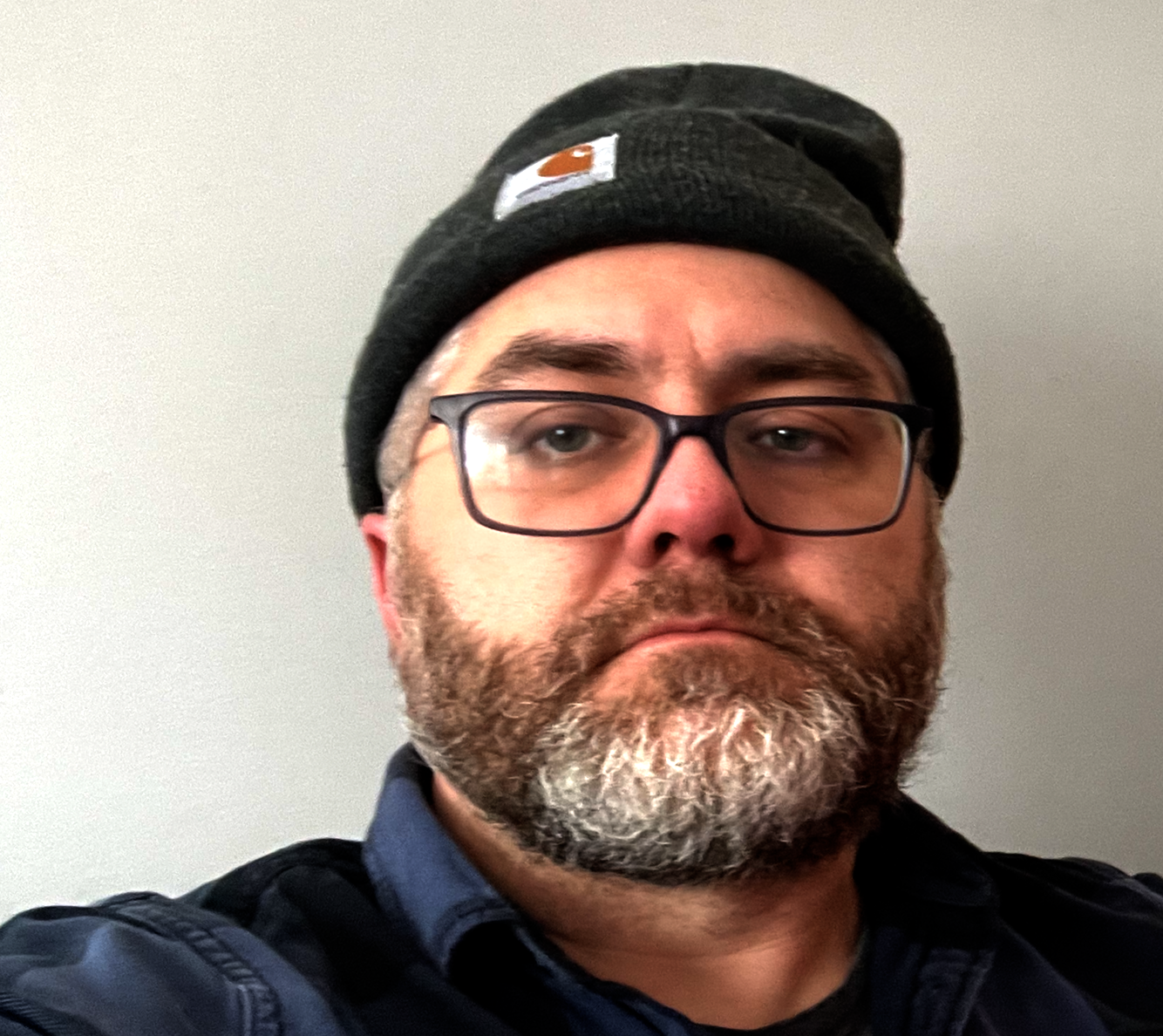
Photo of some guy who just got tenure

Customary adoption, Indian status, and band membership

A friend asked me what type of documentation their child might need to apply for Indian status on the grounds of customary adoption. I’m sharing my response below in case it is of interest to others:

Hey buddy,

Here is that info on customary adoption.

The required documentation may differ if the adoption is grounds for an application for Indian status vs. an application for band membership. Some bands have their own membership codes, which may or may not address adoption in their own ways. On the other hand, some bands’ membership lists are determined by INAC; in those cases having status quite often means having membership. So, if you’re thinking about status only, that’s straight forward (see below). But if you’re thinking about membership as well, you may need to check whether the respective band has its own membership code. Here is a list of all the bands that have their own codes.

For Indian status:

Since 1985, INAC recognizes four different types of adoption as a basis for Indian status (1. private adoption, 2. stepparent adoption, 3. de facto adoption, and 4. custom adoption). In terms of custom adoption specifically, pages 12-13 of the Adoption Officer’s Manual (see here) states:

  • “[The] applicant [should] provide affidavits from the natural parents, adoptive parents, the band council, and elders of the band stating whether they believe that the band has, or had at the time of the event, a custom for adoption and whether the applicant was adopted in accordance with that custom. The affidavit should also indicate when the adoption took place.” 

For band membership:

  • If the band has its own membership code, the adoptee may or may not need to have Indian status to qualify for membership – it depends on how that membership code is written. Also, some bands recognize only “legal” adoptions and not customary adoptions, or vice versa, or both(!). So you’d need to review that band’s membership code to determine what, if any, documentation is required.
  • If a band does not control its membership, then the adoptee will likely be added to that band’s membership list once they have Indian status. So the documentation needed is the same as applying for Indian status.

Finally, I’ve spoken to the odd INAC bureaucrat or two about this stuff, and they tend to have a very, very narrow definition of what counts as “customary.” One even tried to tell me that “customary adoption” only happens when a child is adopted by their grandparent. This is not true, and in fact conflicts with the Adoption Officer’s Manual, which states: “Only the local community is competent to judge whether an adoption has taken place in accordance with the historic customs of that particular community” (see page 12). So, the more support (in writing) you have from elders, band councils, and adoptive/natural family members, the better.

All the best!

Youth-Focused COVID-19 Resources

We’re currently in the midst of the COVID-19 pandemic. Here is some clear, calm, and youth-driven info to assist younger folks in understanding what is happening around them:

My Name is Coronavirus: A 12-page activity booklet that presents key info about the coronavirus, modes of transmission, illness, and preventative measures. Created by Manuela Molina, this booklet is available in Spanish, English, Italian, Portuguese, French, Polish, Hebrew, Indonesian, German, Turkish, Russian, and Egyptian Arabic.

CBC News Kids: Provides a number of excellent youth-driven videos about coronavirus. Topics include: Busting myths about the coronavirus; Why is everybody freaking out about the coronavirus?; What does it mean that the coronavirus outbreak is now a pandemic?

Understanding coronavirus and how germs spread: This is a 34-minute podcast created by Brains On. From the Spotify description: “In this episode we’ll breakdown what we know about this new virus and tell you how to stay safe.”

Thirteen science questions about COVID-19 from teens: This is basically a FAQ webpage answering 13 questions posed by students at a school in New Jersey. Questions cover a range of topics, from vaccine production, to school closures, to protective measures.

Kids Help Phone: We’re here for you during COVID-19 (novel coronavirus): This is a direct support service for children and teenagers with questions about the virus and COVID-19. This webpage provides an excellent mix of FAQs and videos, and provides real-time contact info if kids need to support directly (i.e. 24/7 phone, texting, and online chat options available). The videos are cool, too: they focus on reducing anxiety and empowering young people when dealing with adults and doctors.


Exception: Wet’suwet’en Nationhood, COVID-19, and Canada’s Colonial Soul

As Canada and its provinces respond to Wet’suwet’en assertions of jurisdiction and allied blockades over the past week, I couldn’t help be see parallels between the state’s actions on this matter and the public’s reactions over coronavirus COVID-19. In both, we see a state of exception being made, through which patriarchal settler colonialism is reproduced.

In a short piece published February 26, 2020, Giorgio Agamben critiques Italy’s response to COVID-19 for the way it allows the state to normalize incursions on freedoms based on what he sees as very limited public health risk. As he puts it, fears over the virus are permitting governments to intrude on the lives of citizens, thereby manifesting “[a] growing tendency to use the state of exception as a normal governing paradigm.” On this platform, bodies are barred from movement and enforcement measures are stepped up, which in turn renew the state’s claims to authority and the public’s willingness to accept those claims.

But in Canada, it just so happens that responses to COVID-19 and Wet’suwet’en land defence are taking place at the same time. While this bottleneck could not be predicted, it does provide us with a lens through which to see how both of these issues permit the state and the public to create a state of exception through which settler colonial power not just reproduces itself, but comes into view.

On the one hand, courts and police have deployed “a tidal wave of injunctions” to remove blockades erected in solidarity with the Wet’suwet’en and, indeed, Wet’suwet’en people themselves from their own unceded land. As my Yellowhead Institute colleagues have shown, injunctions have become a tool of state-making that clear the land of Indigenous peoples so that extractive capitalism can continue status quo. We see the normalizing effects of this in the words of conservative politicians who seemed to be supporting vigilanteism, and in the actions of “hero’s” who dismantled solidarity blockades, both of which have led some to caution that Canada should prepare for “a surge in white supremacist vigilantes.” This seems to be a fitting analysis considering that, as Audra Simpson reminds us, settler colonialism in Canada is a joint effort between government and its citizens.

But on the other hand, COVID-19 is releasing its own torrent of exceptionalism. Stirring xenophobia and racism at points around the world, it seems to be broadening hegemonic power in ways similar to Simpson’s analysis of violence: both the state and its citizens are getting involved in the regulation of some bodies in the service of protecting other bodies. In Russia, for example, it appears that citizens are openly discriminating against Chinese individuals; in Canada, Chinese-owned businesses are reporting significant declines in business.

The crux of all this – that is, where these issues come together for me – is in the public’s apparent fear of things beyond state control. Indigenous sovereignties lay beyond the state’s jurisdiction, which is why flashpoint events over land conflicts continue to pop-up every year or two in this country. This might be scary for some because it questions the very idea of Canada and its claims to natural resources – apparently no one can mess with the settler society’s access to Indigenous lands. The reactions to this in the past weeks have included not just injunctions and police enforcement, but a spike in anti-Indigenous racism and heteropatriarchy as seen in part by the fact that Indigenous individuals broadly are reporting feeling unsafe, and in the production of a decal in Alberta apparently depicting Greta Thunberg (a child) in a sexual act.

But COVID-19 might be beyond the state’s control, too. While this remains the be seen, the spectre of coronavirus chaos has proven scary enough already for some to target Chinese individuals and communities globally.

But here is the kicker: Fear is one thing. Anger is another. And the combination of fear and anger spells bad things for Indigenous communities when we realize that settler colonialism is upheld by government and citizenry. As Twitter user Claude pointed out in response to rail blockades, “if you put my family’s well being and safety at risk you’ll turn me into an angry settler.” Well, at what point might COVID-19 put Claude’s family at risk anyway? Who pays then?

In looping back to Agamben’s comments, the fears being stirred by the coronavirus coupled with the state’s responses to Wet’suwet’en assertions of nationhood are clearly creating a state of exception where settler colonial power re-asserts itself. But for Indigenous communities that have been resisting Canadian colonialism for so long, this is not an exception – it has been the daily experience for generations. Instead, the exception of this moment is that it has created an opening: Canada’s settler colonial soul has been laid bare for all to see.

Anishinabek Nation Governance Agreement @ FWFN? A review

By now, most people will know that Fort William is heading into a vote on whether to ratify the proposed Anishinabek Nation Governance Agreement (the Agreement or ANGA). I have been asked by a community elder to review the Agreement and to provide my thoughts. Others, including members of chief and council, have also noted that the community wants to know more about the potential long term effects. On that note, I’ve reviewed the ANGA for how it might affect FWFN specifically, and I share my thoughts here in the spirit of community discussion. If you’re interested in more general critiques of the ANGA, see Hayden King’s piece or this one by Brock Pitawanakwat.

Before moving forward, though, here is a copy of what I believe to be the most recent version of the ANGA. Throughout my review below, I make reference to specific articles of the Agreement, using brackets to do so (such as: 15.5, 15.6, etc.). I’ll start by giving some context, and then I’ll address my concerns. I conclude by offering some general reflections on “self-government” that our community should be aware of.

CONTEXT

The Union of Ontario Indians (UOI) has been working on this Agreement since 1995. It has been negotiated under Canada’s self-government legislation, which recognizes First Nations as having an inherent right to “self-government” in accordance with section 35 of the Constitution Act, 1982.

The Agreement itself provides for self-government at the First Nation level in four areas: 1. Leadership Selection (5.10-5.11), 2. E’Dbendaagzijig Law (citizenship) (5.12-5.23), 3. Culture and Language (5.21-5.23), and 4. Management and Operations of government (5.24-5.27). Importantly, “self-governance” is different than “self-determination,” but I’ll explain that later. The Agreement will turn the Anishinabek Nation/UOI into a central government (i.e. the Anishinabek Nation Government), but each member First Nation will have its own sphere of authority over the four areas noted above.

The ratification vote will take place February 1-29, 2020. Members of UOI First Nations who are over the age of 18 are eligible to vote, and voting can be done in one of three ways: in person, through mail-in ballot, or through an online vote.

TWO GOOD THINGS

While I have a number of concerns about the Agreement (highlighted below), there are at least two good things about it.

First, I like that it uses a confederacy model of governance. While the Agreement will establish the central Anishinabek Nation Government, I like that each member First Nation will retain the ability to make laws and govern itself (subject to certain limitations). To be clear, the Agreement sets up two levels of government: the Anishinabek Nation Government (Chapter 4), and then the First Nation Governments (Chapter 5). This means that Fort William would be able to continue to control its own membership and its leadership selection process through any future laws developed under the ANGA. Of course, Fort William already controls its membership and leadership selection under section 10 of the Indian Act and the First Nations Elections Act respectively, so I don’t see much of a gain here for us in practice. But the confederacy model is nonetheless a good thing to the extent that it distributes political power across all member First Nations.

Second, though not stated in the ANGA, there is money attached to the implementation plan. UOI documents show that each member First Nation will receive a one-time implementation fund of $548,000. This needs to last for at least ten years of implementation work, and possibly longer (16.4). While I haven’t seen any direction on how this money is to be spent, that works out to $54,800/year at best, which is just barely enough to hire one person to assist with this work over the ten year term.

MY CONCERNS

Aside from the two good points noted above, I have at least six serious concerns with the ANGA as currently written. Others may arise over time, and some of my concerns may be resolved through further conversations. But for the time being, here they are:

1. Reinforcing the Chief and Council system

Articles 5.2 and 5.3 require each First Nation to maintain a written constitution before it ratifies the ANGA. To date, I have not been provided a copy of Fort William’s official constitution, even though UOI claims that we have one in place (see this map). I have asked band personnel for a copy of our official constitution, and I have also asked the UOI for a copy. No one has provided one to me yet.

However, I was able to find two incomplete versions of a FWFN constitution on the internet (one in the October 31-November 6, 2016 newsletter, and the other on the FWFN website). Based on what I’ve seen, the FWFN Chief and Council will remain in place if the ANGA is ratified. The draft FWFN constitutions that I have seen say nothing about moving towards a decolonized form of government. For example, rather than instituting a dodem-based system, the FWFN constitution merely reproduces the status quo.

That said, the ANGA enables Fort William to enact new leadership selection laws of any form (5.10). This means that instituting a decolonized form of governance is possible. For now, though, we would stay under the centralized Chief and Council system until such time as we create a new leadership law under the ANGA (10.14). In other words, the only thing that will change in the foreseeable future in terms of leadership is that Chief and Council will have more money at its disposal, and more control over government operations. Given that the Chief and Council system was created to assimilate Indigenous peoples, keeping it around isn’t necessarily a good thing to the extent that it precludes us from rebuilding inherent Anishinaabe governance systems.

2. The ANGA Takes us Further from the Robinson Treaty

Those championing the Agreement have been careful to point out that the ANGA does not undermine the treaties. And in a way, they are right: the ANGA does not abrogate or derogate treaty rights (3.3(a) and 8.7). However, I would argue that it works to mute the Robinson-Superior Treaty in at least two ways: First, it encourages all future self-government agreements to be negotiated through the ANGA itself (13.5 and 15.19). That means that if FWFN ever wants to take control over things like marriage, divorce, taxation, etc. (see 13.1), the stage is set for us to do so through the ANGA instead of the Robinson-Superior Treaty.

Second, the ANGA “domesticates” Anishinaabe sovereignty. Again, while it does not directly undermine the Robinson-Superior Treaty, it constructs our relationship with Canada as one of “government-to-government” rather than one of “nation-to-nation” (2.1(b), 7.1, and Schedule B). In other words, our treaty will continue to exist, but the ANGA channels FWFN’s relationship with the Crown as if we are simply another group of Canadians (like “Ontarians”) rather than a peoples who have an international relationship with the British sovereign. It is this relationship that sets First Nations apart from all other Canadians.

We can see this domestication at work in specific articles of the Agreement, especially those that bring Anishinaabe juridical authority under federal and provincial law. For example:

  • The Agreement is to be interpreted by the laws of Ontario rather than by the laws of Anishinaabeg (1.2);
  • Prosecution of offences will take place under Ontario’s Provincial Offences Act or under Canada’s Criminal Code (6.9); and,
  • Federal and provincial courts have jurisdiction to adjudicate a variety of matters under the Agreement (6.12 – 6.15).

Anishinaabe law continues to exist at Fort William (see this example), and should be given priority in our governance documents, whether the ANGA or otherwise. Articles 6.1 – 6.6 provide space for member First Nations and the Anishinabek Nation to use Anishinaabe law in restorative justice and mediation initiatives, as well as for imposing “Anishinaabe sanctions” (6.2) as an alternative to fines, penalties, or imprisonment (6.4). While these are steps forward, the fact that federal and provincial courts have jurisdiction is problematic to the extent that they reassert Canadian dominance over Anishinaabe lifeways.

In other words, the ANGA does not explicitly kill the treaty, but it sets the stage for it to whither away and die on its own.

3. The ANGA Contradicts itself

The Agreement runs counter to aspects of its preamble, specifically with regard to where governing authority comes from. The preamble states in part: “Debenjiged kiimiingona dedbinwe wi naagdowendiwin. Creator gave us sovereignty to govern ourselves.” I fully agree with this statement. Yet, if the Agreement is based on sovereignty provided by Creation, why then does the UOI feel the need to ask Canada for permission to be self-governing? Those who self-determine their lives do not have to ask for permission to do so. I have more to say on this below.

4. The ANGA is mostly redundant for Fort William

As alluded to above, the ANGA doesn’t actually provide much change for Fort William, at least not in the foreseeable future from what I’ve seen in the draft FWFN constitutions. It does provide more funding, and it does provide more autonomy over everyday management of governance operations (including financial administration, conduct of meetings, establishing “Anishinaabe Institutions”) (5.24).

That said, Fort William already has effective control over three major ANGA self-government areas, namely, leadership selection (5.10-5.11), citizenship (5.12-5.20), and culture and language (5.21-5.23). Note the following:

  • Fort William First Nation already has control over how leadership is selected. Chief and Council opted into the First Nations Election Act in 2019 through a BCR;
  • Fort William First Nation already controls its band membership. We took control of it in 1985 by writing our membership code in accordance with section 10 of the Indian Act;
  • Fort William First Nation already has control over its culture and language. The Indian Act made aspects of Indigenous cultural expression illegal, but the Act was changed in 1951 to no longer do this. In this sense, Fort William has been free to assert its culture and language for the past 70 years. Regardless of Canadian law, we have had this power since time immemorial, as can be seen in the fact that we have held annual pow wows on the mountain for generations.

Thus, if we already have control over much of what the ANGA stands to offer, I’m not sure it is worth marginalizing our treaty, or exchanging much of our self-determination for narrowly defined aspects of “self-government” (more on this below). I’d much rather see our leadership press Canada to relate with us on a nation-to-nation basis that foregrounds the treaty relationship.

5. Transparency

As noted above, I have not been able to review a copy of FWFN’s official constitution, despite asking the band for one, and despite raising this issue with the UOI. This is concerning not only for the obvious reason that the UOI has included FWFN in its list of bands with constitutions, but also because the ANGA ratification process itself rests in part on the principle of “openness and transparency” (15.2(a)). If this is the case, why has it been so difficult to find a copy of our official constitution?

6. No option for Citizen intervention at “Intergovernmental Forum”

Schedule B of the ANGA provides terms of reference for the “government-to-government” forum between the Anishinabek Nation and Canada. This forum is a platform for the parties to promote cooperation on “issues of mutual interest or concern.” I would assume that there is a process that citizens can use to ensure their needs are addressed in the forum by Anishinabek Nation Government representatives. However, there is no platform within the forum for citizens to intervene on their own behalf. This is problematic. Citizens should be given a way to make sure any lived issues/concerns arising from the ANGA can be aired at this level directly and without having to go though community leaders. Doing so would strengthen accountability.

PROBLEMS WITH “SELF-GOVERNMENT”

The critical point to understand when reading self-governance agreements such as the ANGA is that they are instruments that domesticate Indigenous political and legal orders, bringing them further and further into the confines of Canadian sovereignty. This manifests in different ways. For example, it might show up in the form of saying Ontario courts have jurisdiction over matters arising from the Agreement, or it might show up in clauses that bar Anishinaabeg from inviting non-Canadians to live with them in their lands (4.17, 5.18). This is a death by a thousand cuts. The goal is to slowly but surely whittle away Anishinaabe political authority and jurisdiction as its own thing, and bring Anishinaabeg political life under the umbrella of Canada’s presumed authority over Indigenous peoples. Canada is not interested in deferring to inherent Indigenous political authority, and so it reconciles Anishinaabeg governance under its constitution, for example, as an “inherent right.” The language sounds great, but in fact it’s a magic trick. Lost in the transaction is the fact that Anishinaabeg already have self-determination outside of and before Canadian sovereignty, but such self-determination is exchanged for the more limited (and limiting) status of being self-governing – where Canada “allows” Indigenous folks a measure of control over some aspects of their lives, but only in relation to “matters that are integral to their unique cultures, identities, traditions, languages and institutions” (ANGA Preamble, para. 9). This promotes the idea that “authentic” Anishinaabe law and governance are frozen in the past, which simply is not true.

In other words, it is critical to stay vigilant and alert to the fact that “self-governance” is different than “self-determination.” Those who self-determine their lives do not have to ask for permission to do so. The Anishinabek Nation Governance Agreement is a self-governance agreement that, in my opinion, exchanges expansive Anishinaabeg self-determination for a more limited form of governance over four areas of life (leadership, citizenship, culture and language, and governance operations).

Finally, it’s important to note that UOI has also produced an “Anishinabek Nation Fiscal Agreement” which supports the ANGA (see Chapter 8 of ANGA). I did not reference this document in my review above, but I link it here for your consideration.

Baamaa pii: Parting words for Squid

Earlier today, we said goodbye to our friend, Squid.

Squid lost the use of his right hind leg last summer due to nerve damage in his spine. Our vet believed that this was a result of an infection. Luckily, we caught it before it spread to the other leg. Now partially paralyzed, we were able to raise money to buy him a wheelchair, which he used for seven months. However, with the start of this summer we saw a decline in his mobility; he no longer wanted to go to the dog parks. By September, the disease was spreading to his left hind leg, and he was showing signs of arthritis in his front legs. It wasn’t long after that that he could no longer stand or walk on his own.

I met Squid in 2006 when I returned from living in Europe. He was two years old by then, and was living with my mom and dad. But he decided that I was his human, and so he came with me to Peterborough, Ontario in 2008 when I started my undergraduate degree. He left me nine years later, departing the day after I finished my PhD.

Squid made friends around the country as I worked on my graduate degrees. While he was born in Fort William First Nation (Ontario), he ended up living in places like Victoria, Winnipeg, and Saskatoon, where he ended his journey. He touched the lives of people wherever he went. He taught me how to forgive myself.

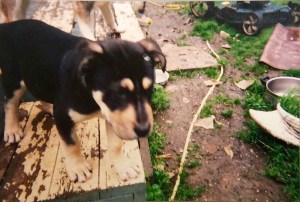
Squid youngest
Baby Squid, Fort William First Nation, c.2004.

Squid spent his last days doing the things he loved most. Despite no longer being able to walk, he was able to go swimming in a local therapeutic pool for dogs; to take a trip to the beach; to enjoy our regular visits to the park where he chewed sticks and his favourite ball. He also ate like a king, munching on steak all week. And in his final hour he enjoyed his favourite taboo treat: buttermilk blueberry muffins from Starbucks.

Squid died surrounded by the people he loved: Sarah, my mom and I, and his little brother Emmett. We were with him to the end. He died in my arms.

IMG_0631
Love for Gran, Thunder Bay, June 2016.

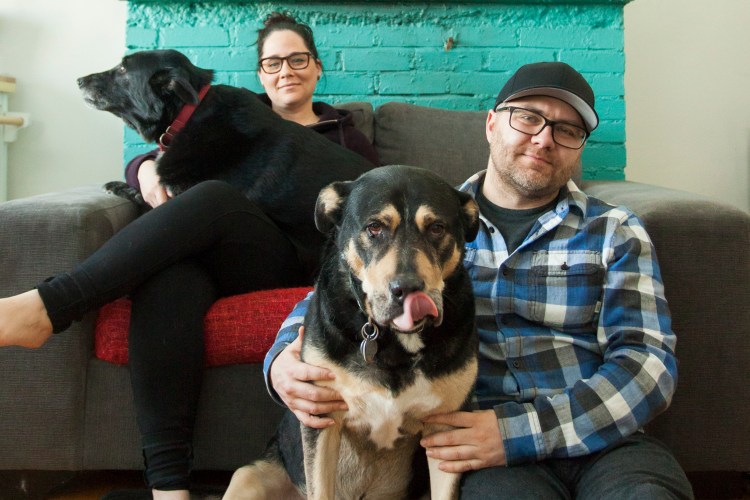
(Family photo at top by Nadya Kwandibens, March 2017)

Posted: Thursday, October 19, 2017


Call for Papers: Adoption and Indigenous Citizenship Orders

AlterNative: An International Journal of Indigenous Peoples
Special Edition on Adoption and Indigenous Citizenship Orders

Edited by Damien Lee and Kahente Horn-Miller

In recent years, questions about identity and belonging have forced their way into both Indigenous and mainstream conversations about what it means to be Indigenous. Most recently in Canada, for example, discussions regarding author Joseph Boyden’s claim to Indigenous identity have dominated public discourse. Some argue that bloodlines are enough for someone to claim Indigeneity while others argue that bloodlines have less to do with belonging than do the political processes Indigenous peoples use to claim individuals on their own terms.

However, adoption inevitably gets brought into such discussions, even when the person at the centre of debate makes no claims to being adopted. The discussion about Boyden’s Indigeneity offers a case in point – while he narrated his Indigeneity as a matter of bloodline and oral history, others tried to demonstrate the fluidity of Indigenous citizenship orders by bringing adoption into the discussion on his claims. In the end, it was announced that he would be adopted by an Anishinaabe family, a development that was met with more questions than answers. As these recent events show, the introduction of adoption into conversations about belonging can cause confusion and anger, while also pointing to the vitality of Indigenous citizenship orders today.

One reason for such confusion is the dearth of scholarly attention devoted to exploring the importance and challenges of adoption in contemporary Indigenous citizenship-making practices. Up to this point, adoption has been discussed in both dubious and celebratory terms. In their 2012 article “Decolonization is not a Metaphor,” for example, Eve Tuck and K. Wayne Yang rightfully argue that adoption can be used as a settler move to innocence, where it is used as a means to shirk responsibilities to decolonize. Alternatively, Indigenous peoples and communities continue to use adoption to assert their self-determination when determining who belongs with them. Thus, while the latter offers great possibility for better understanding how Indigenous citizenship orders centre and enact self-determination, little writing exists in the way of explaining adoption’s role within Indigenous citizenship governance systems, its limitations within these systems, and ways in which the practice may or may not account for settler colonialism and white supremacy. In this sense, adoption narratives offer opportunities to think through the complexities of Indigenous citizenship governance in the present.

Given the complexities glossed above, we invite article submissions to a special edition of the AlterNative Journal exploring adoption’s significance to and within Indigenous peoples’ citizenship orders. Topics may include but are not limited to:

  • the importance of adoption to Indigenous citizenship-making historically and contemporarily;
  • the limits of adoption as Indigenous citizenship-making within a settler colonial context;
  • the ways in which adoption centres familial sovereignties rather than colonial legislation/actors;
  • adoption as “settler move to innocence,” and how Indigenous peoples have addressed such a concern;
  • intersectional approaches to understanding both the limits and opportunities of adoption in Indigenous citizenship orders;
  • the ways in which adoption brings political rather than merely sexual self-determination to the fore in citizenship discussions; and,
  • the role adoption has played/can play in queering Indigenous citizenship orders.

Importantly, we are interested in publishing divergent as well as convergent viewpoints on this topic. We believe that the tensions arising around adoption and belonging within settler colonial contexts bring with them important lessons to be learned.

Abstracts of no more than 250 words should be submitted by August 1, 2017 for review. The authors of those abstracts selected for inclusion will be invited to develop a full article of between 5,000-7,000 words by September 15, 2017. Please note: selected articles will go through two rounds of blind peer review; the first will be coordinated by the guest editors, and the second will be managed by the AlterNative Journal editorial board. Selected authors should therefore prepare for up to two rounds of revisions.

Full articles must conform to the Sixth Edition of the Publication Manual of the American Psychological Association. More information on AlterNative Journal submission guidelines is available here.

All correspondence, including submissions and questions, should sent by email to: Adoption.AlterNativeJournal@gmail.com

Guest Editor Bios
Dr. Damien Lee engages with the space of Indigenous Studies from the position of a cis-gendered racially-white man who belongs with the Anishinaabeg of the northern shore of Lake Superior. He was adopted as an infant into Fort William First Nation in accordance with Anishinaabe law, and raised as Anishinaabe by his family. Damien is an Assistant Professor in the Department of Indigenous Studies at the University of Saskatchewan. He is also wrapping up his dissertation, which employs Indigenist research methodologies to understand what Anishinaabe citizenship orders look like through adoption narratives within his community.

Dr. Kahente Horn-Miller is Bear Clan and a Kanien’kehá:ka mother from Kahnawà:ke. It is through her motherhood, governance work, community based research and performances rooted in Haudenosaunee (Iroquois) culture and traditions she actively puts Indigenous theory into practice. An Assistant Professor in the School of Indigenous and Canadian Studies at Carleton University, she is currently working on a manuscript about (re)conciliation and the Great Law of Peace. This work is centred in the issues of Indigenous sovereignty, identity, and Haudenosaunee philosophy as expressed through visual culture, stories, acts of resistance and social practice.

Briefing Note: Fort William Band Council Resolutions re 1987 Membership Code

December 1, 2016

Background
On November 30, 2016, the Fort William First Nation (FWFN) chief and council approved two Band Council Resolutions (BCRs) pertaining to the 1987 FWFN band membership code. This briefing note explains the implications of these two BCRs, and contextualizes them within the history of the 1987 band membership code.

Context: The Indian Act, 1985
In 1985, the Indian Act was amended in such a way that allowed Indian bands to control their own membership lists. Section 10(1) of the Act provides that a band may control its membership list by meeting three criteria: 1. it writes its own membership code; 2. it gives appropriate notice to the Minister of Indian and Northern Affairs Canada that the band wishes to assume control over its membership (this includes sending the code to the Minister for review); and, 3. a majority of the electors of the band consent to the band taking control of its membership list. According to section 10(8) of the Act, once approved by the Minister, the membership code submitted becomes the law governing band membership decisions “from the day on which notice is given to the Minister.”

The 1987 FWFN Band Membership Code
Fort William First Nation took advantage of section 10 of the Indian Act. It developed its own membership code in consultation with the community, leadership, and a lawyer. On June 24, 1987, the majority of the electors approved the membership code. It was then sent to the Minister of Indian Affairs in July 1988. Finally, on June 26, 1990, after some correspondence between Fort William and the federal government, the Minister of Indian Affairs, Mr. Tom Siddon, gave notice to Fort William that “pursuant to subsection 10(7) of the Indian Act … the Fort William Band has control of its membership effective June 26, 1987.” With that, the 1987 band membership code became law, and has remained the law governing FWFN band membership since.

The November 30, 2016 BCR’s
As listed in the November 30, 2016 FWFN chief and council meeting agenda, the following two BCR’s were discussed and approved by council:

  1. BCR16-76 – Ratification of 1987 Membership Code
  2. BCR16-77 – Development of Membership Committee and Membership Court

1. BCR16-76 – Ratification of 1987 Membership Code
The name of this BCR is misleading. It does not “ratify” the 1987 band membership code. As noted above, the code became law through Ministerial approval in 1990. Rather, BCR16-76 merely acknowledges that the 1987 membership code is the law governing deletions and additions to the FWFN membership list. This BCR rights an historical wrong: as Ken Ogimaa, FWFN Chief Executive Office, put it during the meeting, Fort William First Nation has been failing those who rightfully belong by not using the 1987 membership code. This BCR also provides protection for the band in the event that it is taken to court over its membership decisions; as Mr. Ogimaa suggested during the meeting, Fort William could be found to be breaking the law if it was found to be not using its own membership code. There is legal precedent for such a scenario. After discussion, the FWFN chief and council voted unanimously to approve BCR16-76 during the November 30th meeting.

2. BCR16-77 – Development of Membership Committee and Membership Court
This BCR implements two components of the 1987 FWFN membership code. The 1987 code requires that 1. a membership committee be established, and, 2. a membership court be appointed by chief and council. The membership committee makes the majority of decisions regarding band membership. The membership court, on the other hand, is an appeal mechanism; it allows individuals denied membership by the membership committee an avenue to have their denial overturned. Importantly, according to the 1987 membership code, the FWFN chief and council does not decide who is a member of the band. The only roles allotted to chief and council in regard to deciding membership are to: a) establish a membership committee, b) appoint individuals to the membership court, and c) approve out-adoption of children adopted by another Indian band (more information is available here). After discussion, the FWFN chief and council voted unanimously to approve BCR16-77 during the November 30th meeting.

What does it all Mean?
First and foremost, the approvals of BCR16-76 and BCR16-77 re-centre Fort William’s band membership practices on the 1987 membership code. The following list highlights important aspects of how this affects membership decisions at FWFN:

  1. Indian status is not a prerequisite to become a member of the band. Non-status band members have certain rights under section 4.1 of the Indian Act (for example: they may vote in band elections, and may receive land claims money).
  2. A child is a member of the band if one or both of her parents are members of the band. However, a child must apply for probationary membership in the band if she has “one parent who is a member of the Band, and that parent also has only one parent who is a member of the Band.” The probationary period is 5 years.
  3. A person who is not a member of the band, but marries a member of the band, can apply for probationary membership (5 year waiting period). Marriages can take place according to “provincial law” or “Indian custom.”
  4. A person who transfers from another band does not automatically become a member of Fort William. Rather, they must apply to be a probationary member of the band. (5 year waiting period)
  5. Adoption is a basis for automatic membership in the band: “A child who is adopted by a member or members of the Band shall, as of the date of the adoption, become a member of the band.” No probationary period required.

Note: Becoming a member of the Fort William Indian band does not entitle one to Indian status under the Indian Act.

Next Steps
As was made apparent in the November 30th chief and council meeting, next steps now include establishing the membership committee and appointing individuals to the membership court. Certain sections of the 1987 membership code may also need to be changed (e.g. one section bars anyone with communicable disease from applying for probationary membership). I would suggest that most of this revision work has already been completed; see the draft Fort William First Nation Citizenship Code, 2015, which was developed by the FWFN Governance Committee through community consultation over 2014 and 2015.

Difficult Questions
While the passage of BCR16-76 and BCR16-77 are important steps for Fort William First Nation, several questions remain. As one FWFN councillor asked during the November 30th chief and council meeting, what about those individuals whose names have been added to the band membership list since 1987 in ways other than by using the membership code? Are they members of the band?

Furthermore, if the band has not been following its own membership code for an indeterminate amount of time, it can be assumed the membership list includes some names of people whom are not members of the band (in cases where they were made members outside of the membership code), and potentially excludes names of people whom otherwise might have been members of the band under the 1987 membership code (e.g. those who rightfully belong but are not status Indians). This is a troubling scenario. A band’s elector’s list is based on its membership list. If paragraphs 103 and 104 of the federal court case Cameron v Canada 2012 have any bearing at Fort William, the band might need to revise its membership list in accordance with its 1987 membership code before any future voting can happen. How does this affect the spring 2017 chief and council election? How does it affect the impending Grand Trunk Pacific Railway Specific Claim Settlement ratification vote scheduled for early 2017?

-30-